FastPix for live sports
Video APIs for live sports streaming
FastPix low-latency live API delivers live sports glass to glass in 4 to 7 seconds, to your app, to social platforms, and behind a signed URL for members-only access.
Per-minute pricing, no per-seat charge. $25 in signup credits, no credit card.
TRUSTED BY PRODUCT TEAMS SHIPPING VIDEO AT SCALE






Why FastPix
Complete video infrastructure for live sports streaming
Ingest, transcoding, delivery, DVR, clipping, playout and data come from one API key, billed per minute rather than per concurrent viewer.
One API, whole stack
Ingest, transcoding, delivery, DVR, clipping, playout and data all come from the same API key.
Built for scale
Multi-CDN delivery scales with the audience, so a big fixture runs on the same setup as a quiet week.
Low latency by default
Live streams reach the viewer within 4 to 7 seconds glass to glass, over LL-HLS.
Pay per minute
Billed on minutes, never on concurrent viewers, so a big crowd is good news. Docs, SDKs and engineers in Slack.
Developer reference
Every endpoint a live sports operation uses
Everything on this page maps to a documented call, grouped the way a match day gets built.
Live ingest
Playback and DVR
Clipping and archive
Cloud Playout
Distribution
Customer story
The stream ran for eight hours without a single crash or buffer spike. We saw some viewers switch networks, others drop to low resolution, but the stream never broke.
Aditya Rana
Platform Engineer, Oceaniek Stream

Ingest and transcoding
RTMP and SRT ingest with real-time transcoding
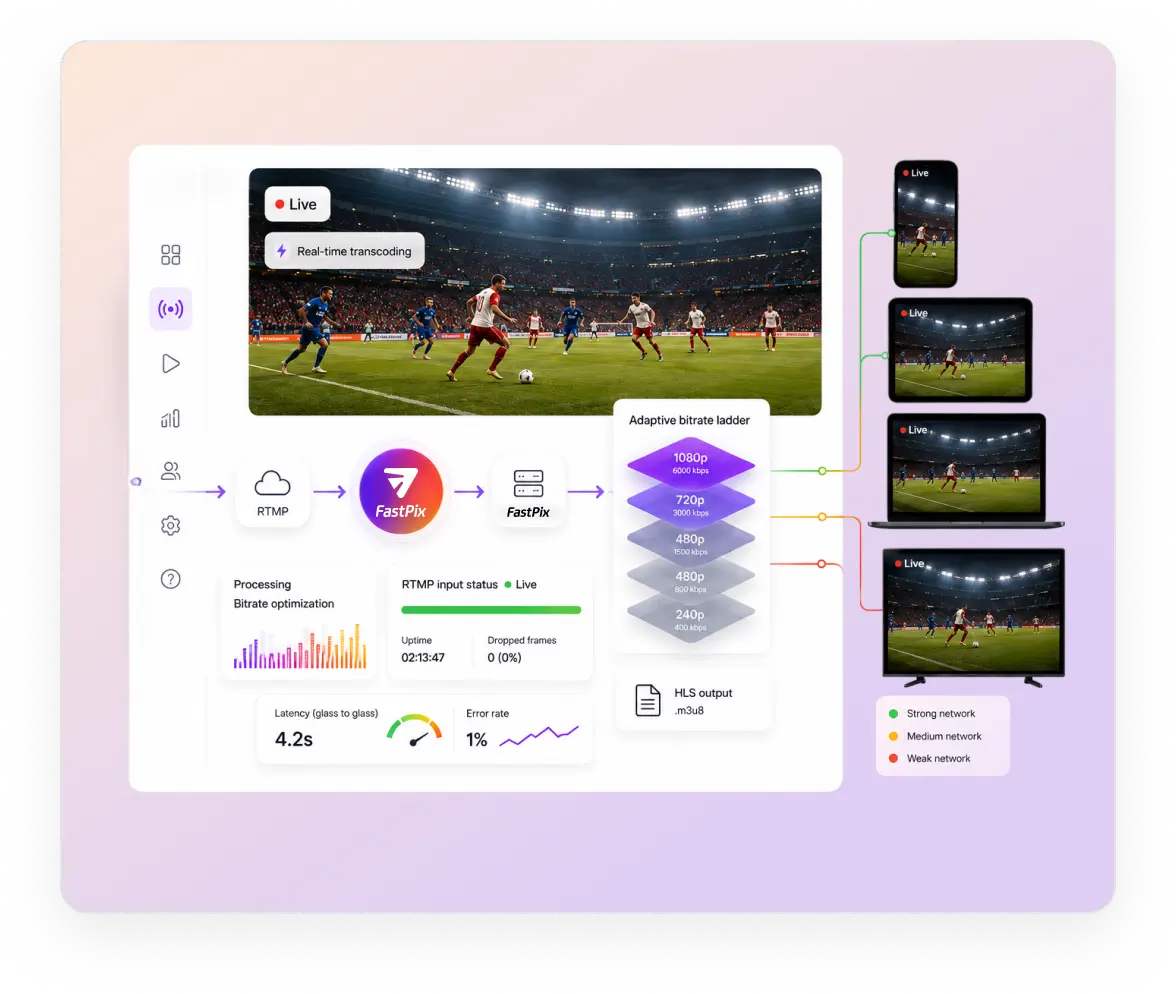
FastPix takes a live feed from OBS, vMix or any encoder over RTMP, RTMPS or SRT, then transcodes it and delivers HLS to any device a viewer opens.
Packaging and delivery
Low latency LL-HLS with multi-CDN delivery
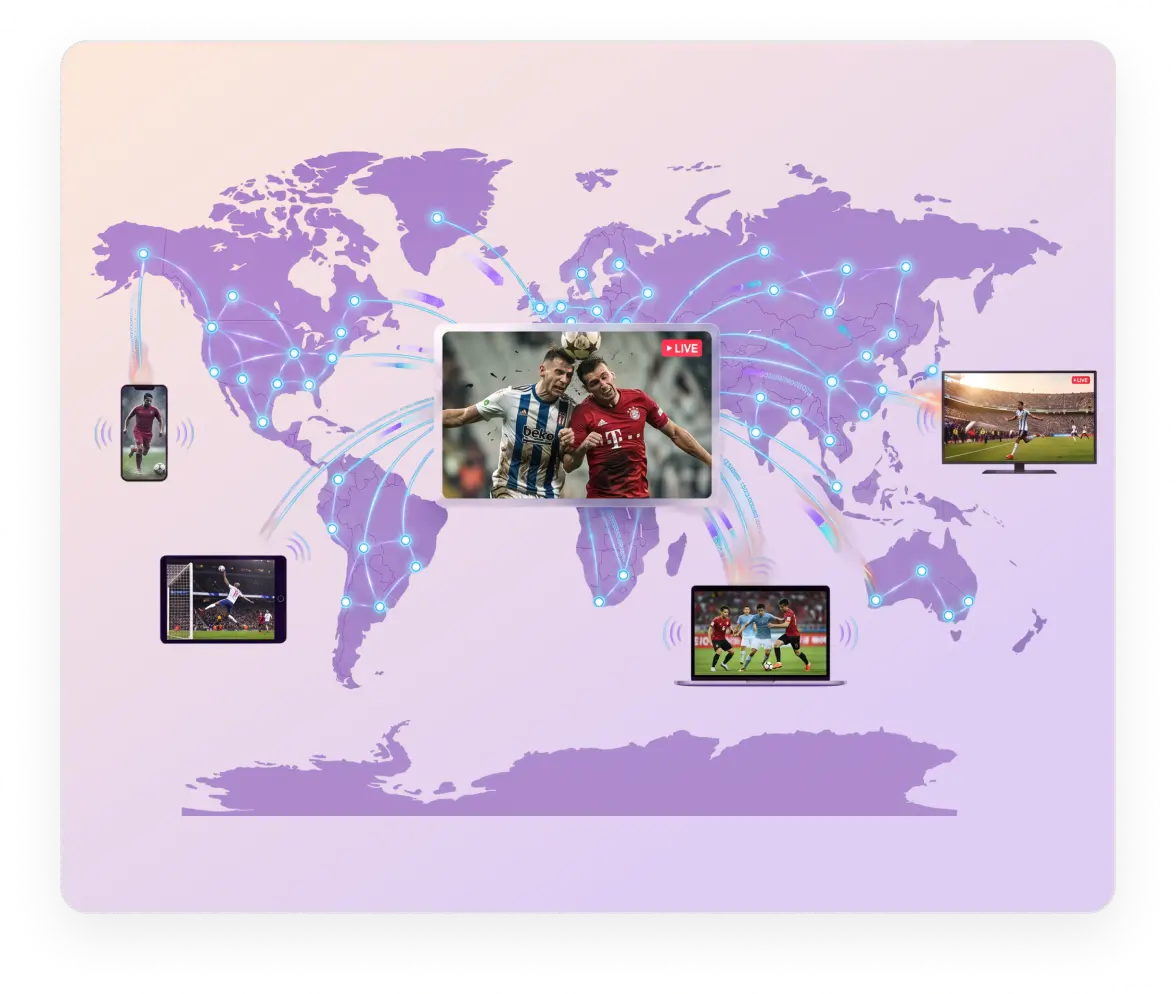
Packaged as LL-HLS and served from more than 300 locations, so viewers see the action within 4 to 7 seconds, wherever they are.
Set lowLatency: true and the stream runs 4 to 7 seconds glass to glass, where cable takes 50 to 80. Explore
Multi-CDN from 300+ locations, so a fixture that draws a crowd is served near the people watching it. Explore
HLS output, so the same stream plays on phones, browsers and TVs without a separate build. Guide
DVR and catch-up
Live DVR with rewind, pause and catch-up
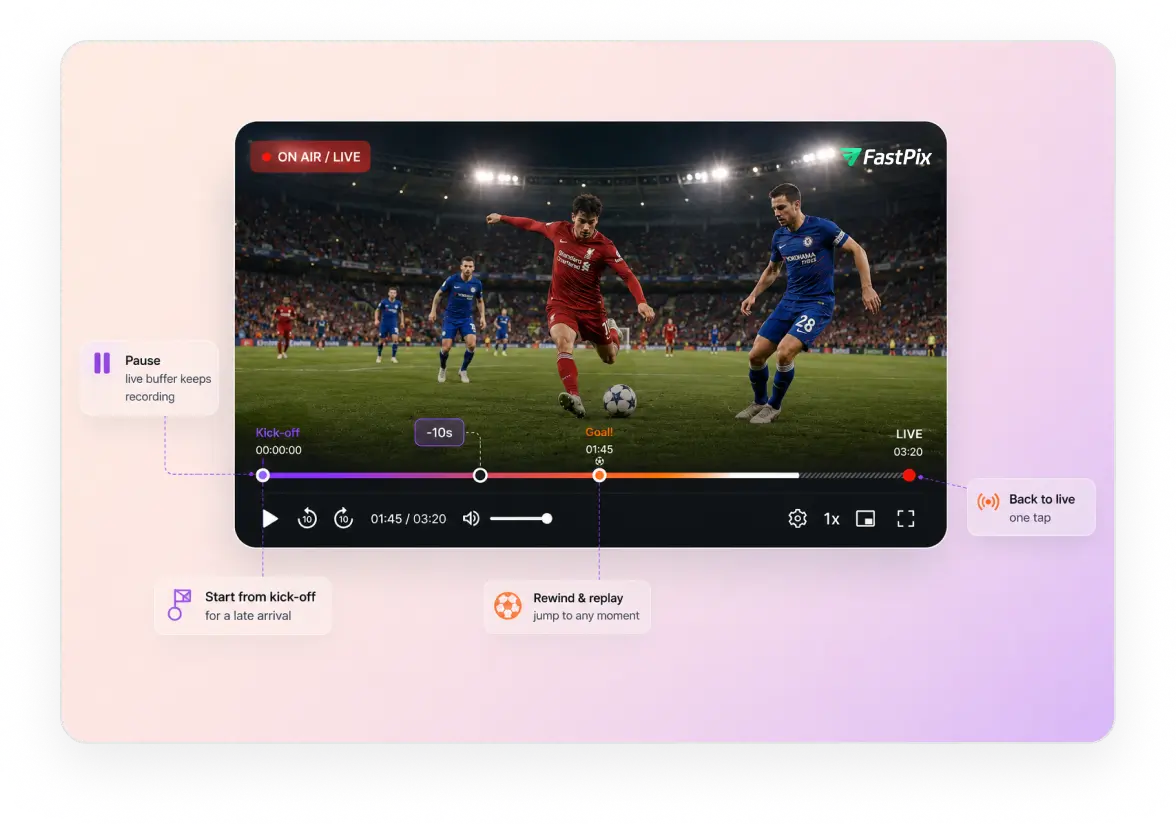
A time-shift buffer lets viewers pause, rewind and start from the beginning while the match is still running, then return to the live edge whenever they want.
Instant clipping
Instant live clipping for match highlights
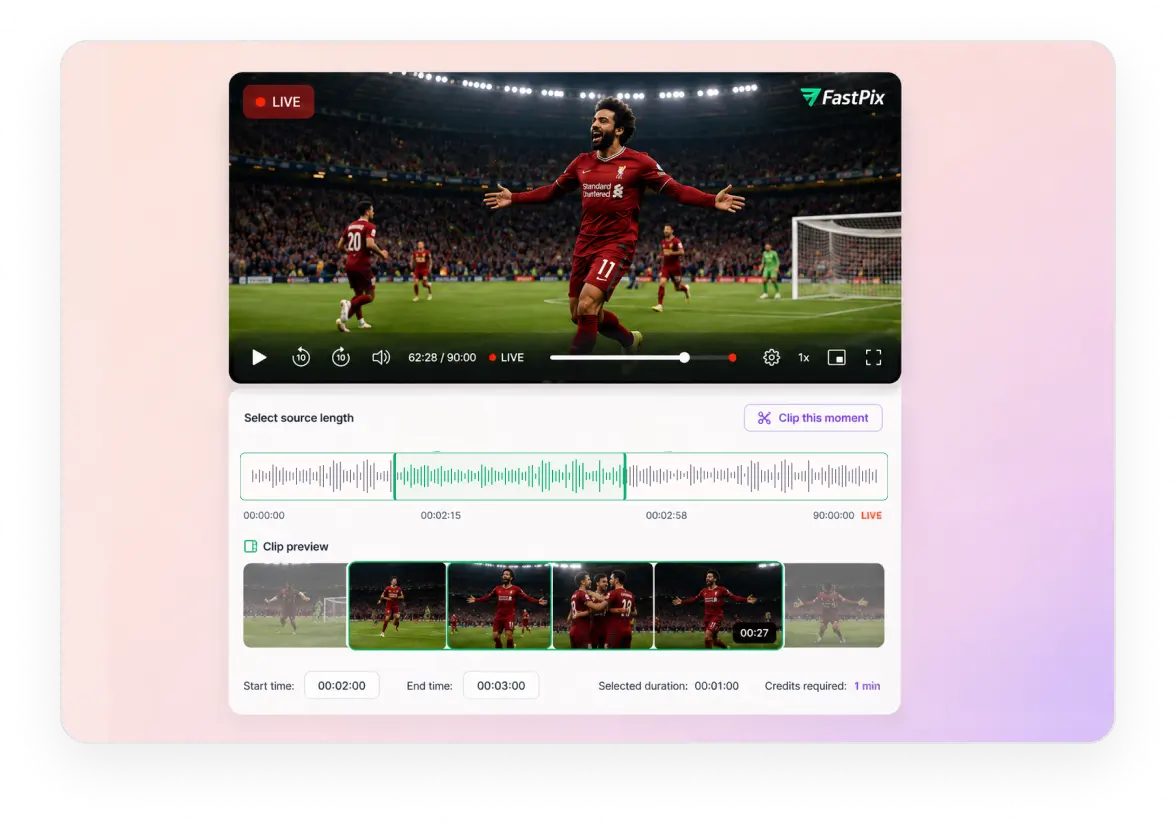
Clip a highlight mid-match. Mark a start and end timecode on the live stream and get a shareable asset back, without waiting for the match to end and become a VOD asset.
Clip while the stream is running, up to 20 minutes per clip, published as its own playback ID. Guide
Automatic live to VOD. The moment a broadcast ends, the match is stored as an asset. Guide
AI-scored clipping is in early access. Automatic moment detection is on a waitlist, not a switch you flip today.
One thing worth knowing: highlight speed is often limited by rights rather than technology. Some competitions embargo clips for hours after full time. Extraction is instant; publication is your rights holder's call.
Player SDKs
Video player SDKs for web, mobile and smart TV
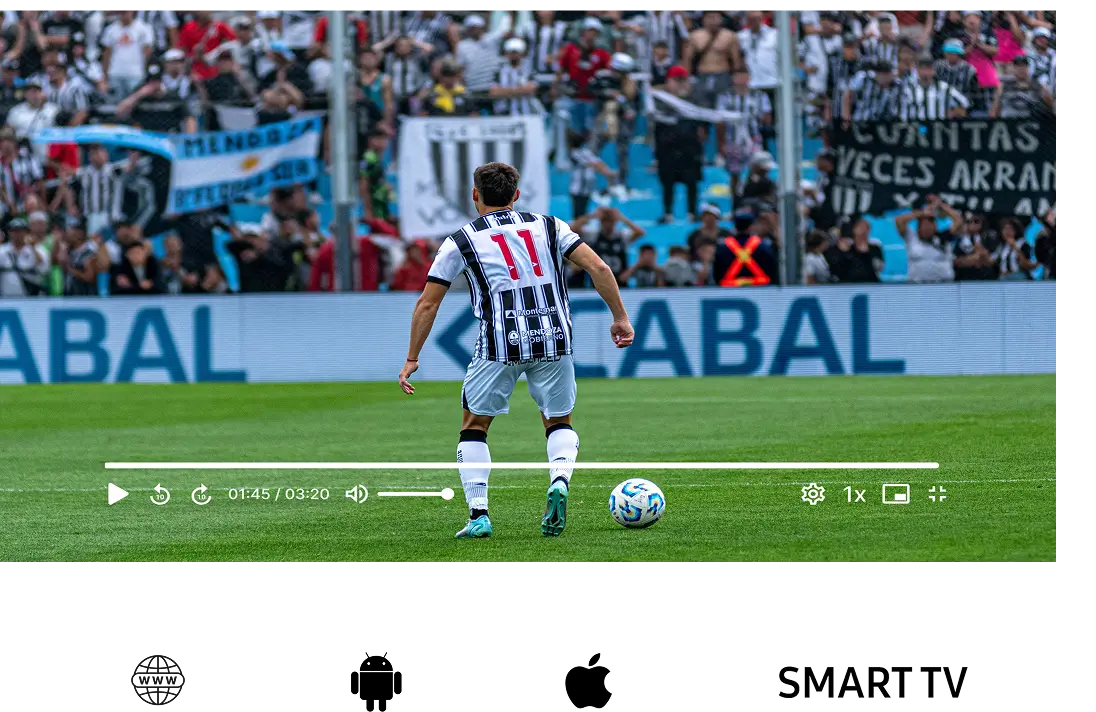
Fans watch on a phone, a laptop and the television in the same evening. One playback ID drives the player on every one of them.
Native SDKs for web, iOS, Android, Flutter and React Native, all reading one playback ID. Guide
Smart TV through the web SDK, covering Samsung Tizen and LG webOS. Guide
DRM playback where a rights deal needs it, with Widevine, FairPlay and PlayReady. Guide
Playback data from the same SDK, so quality metrics arrive without a second beacon to wire. Guide
Built API first
Live streaming API and SDKs
Wire a fixture list straight into the platform. Create a stream when a fixture is announced, subscribe to webhooks so ops knows the second an uplink drops, and read concurrents live.
SERVER SDKS
CLIENT SDKS
Read the API referenceMonitoring
Live stream monitoring and playback health
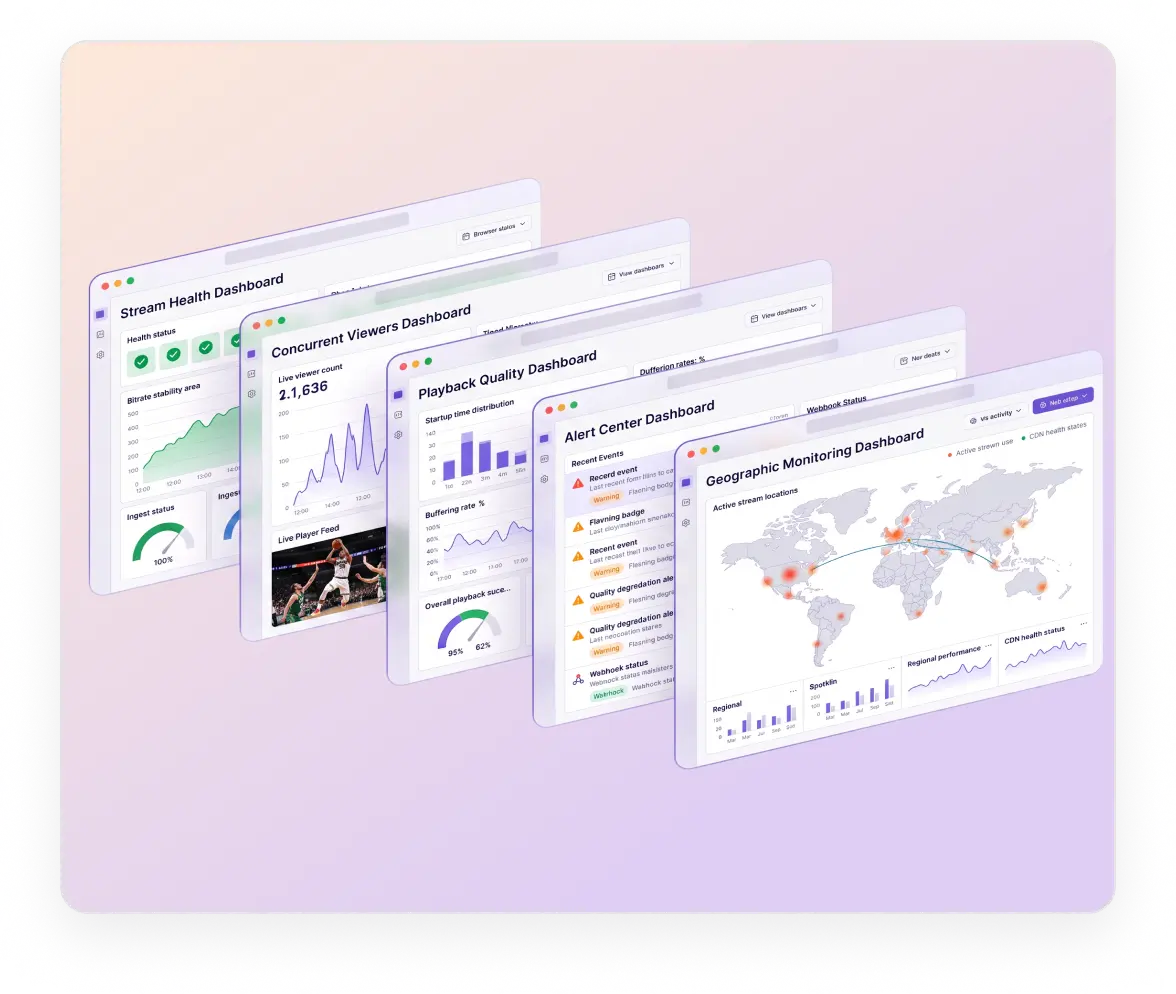
Operations needs to see a problem before the audience does. Ingest state, concurrent viewers and playback quality all report while the match is still running.
Stream health as it runs, so a failing uplink shows up in seconds rather than in complaints. Guide
Concurrent viewers live, read straight off the stream while the match is on. Guide
A webhook on every state change, active, idle or disconnected, so your dashboard reacts on its own. Guide
Alerts when quality slips, on startup time, rebuffering and playback errors. Guide
Between fixtures
24/7 live stream channels with cloud playout
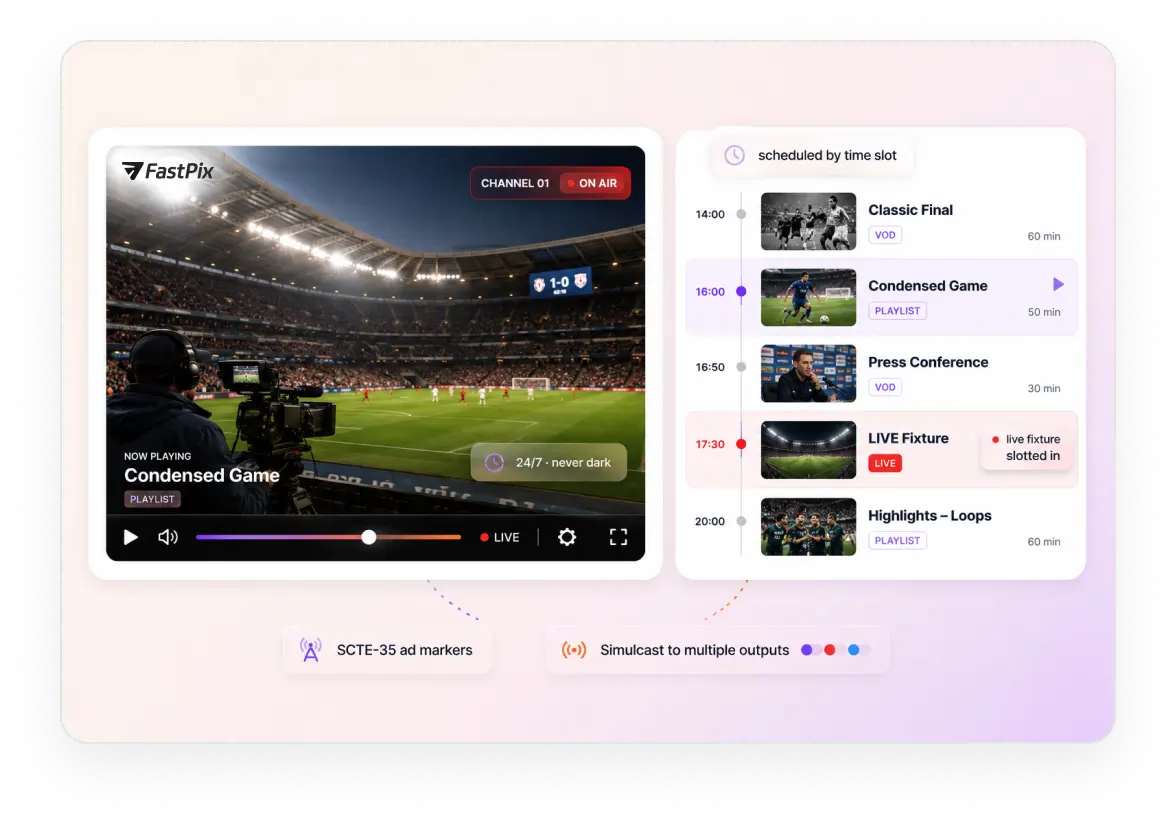
Cloud Playout schedules the archive into a 24/7 channel between fixtures: classic matches, condensed games, press conferences and shows, so the app is never dark when there is no live game.
Program by time slot. Drop a live fixture into a weekly grid and the channel cuts to the match and back.
SCTE-35 ad markers on linear channels, so breaks signal properly to your ad stack. Guide
Simulcast the channel out to YouTube, Facebook, Twitch or any RTMP endpoint. Guide
Schedule around a live fixture so the channel and the match run off one library. Guide
Channels are configured with our team around your fixture calendar and your ad stack. Live streaming, clipping and the archive are self-serve from a free account today.
How it comes together
Build a live sports streaming platform like ESPN or Hotstar
Five steps between a camera at the ground and a channel that never goes dark.
Package and deliver it
LL-HLS packaging out over multi-CDN, so the action reaches every screen quickly.
GuideLet viewers catch up
A time-shift buffer for pause, rewind and starting the match from the beginning.
GuideCut highlights mid-match
Mark a timecode range on the running stream and publish the clip straight away.
GuideKeep the channel on
Schedule the archive into a 24/7 linear channel for the days with no fixture.
GuideStreaming a conference or a one-off event instead? See live events. Building a full OTT catalogue? See entertainment and OTT.
Bring us your next fixture
Give us a real feed and a real fixture. In 30 minutes we will take the uplink, put it out over LL-HLS, cut a clip mid-stream and schedule the archive into a channel.
Prefer to try it yourself? Start free with $25 in credits
Common questions
Live streaming questions, answered.
How low is the latency, really?
4 to 7 seconds glass to glass with low latency enabled, over LL-HLS. For context, the 2024 Phenix Super Bowl study measured cable at 50 to 80 seconds and major streaming services between 29 and 55. Your stream reaches fans ahead of the broadcast, which is what prevents the spoiler problem. If you need sub-second for in-play betting, that is a different category of product and FastPix is not it.Can I enforce territorial blackouts?
Not today. Playback restriction covers domain allow and deny lists, plus rules for the browser or app making the request. There is no country, region or IP-level restriction, so in-market blackouts and territorial rights windows cannot be enforced at the platform layer. If your rights deal requires geo-enforcement, raise it with us before you build.Do you support multi-angle or multi-camera?
No. A stream is a single feed. Multiple angles means multiple streams, switched in your own application or in production before the uplink.How fast can I get a highlight out?
Mark a start and end timecode against the running stream and the clip is produced as its own playback ID, up to 20 minutes long, without waiting for full time. AI-scored automatic moment detection exists but is in early access rather than generally available.
Pricing
Live streaming and OTT platform pricing
Per minute, not per concurrent viewer. Sports concurrency spikes violently at kickoff and at the final over, so per-minute billing means a viral fixture does not arrive as a surprise invoice. See full pricing.
ENCODING
Pay per minute encoded
$0.0267/min 1080p Pro
Per-title ABR encoding across H.264.
STREAMING
Pay per minute streamed
$0.00067/min 1080p Pro
Multi-CDN delivery from 300+ POPs.
STORAGE
Pay per minute stored
$0.00268/min 1080p Pro
Assets stored and CDN caching, lifecycle handled.
Keep reading
More on building a live sports streaming platform
Latency, highlights and the 24/7 channel between fixtures.
Build a live sports app like ESPN
The full path from venue encoder to a watchable stream on every screen.
TutorialWhat a sports streaming app costs
A 2026 breakdown of encoding, delivery and archive spend across a season.
BlogBuild a 24/7 sports channel
How an archive becomes a scheduled linear channel with cloud playout.
BlogLow latency streaming with APIs
What actually moves glass to glass time, and what only looks like it does.
BlogWhat is instant live clipping
Cutting a shareable moment out of a stream while the match is still running.
BlogClip moments from a live stream
Mark a start and end timecode and publish the clip as its own playback ID.
DocsSupport
Three ways to get unstuck
Engineering
Engineering support
Stuck on an API call, a webhook signature or a player integration? Reach the engineering team directly, and hear back in hours rather than days.
Contact engineeringDocs
Integration help
Quickstart guides, SDK examples and playback logs in your dashboard, for the integrations most teams hit first.
Browse the docsCommunity
Solution architect
A new build, a migration off another platform or a complex multi-tenant rollout. Plan it with a FastPix solution architect.
Join the Slack community